Choicetech literacy:
the knowledge and judgment needed to make better decisions in the complex, data-rich environments built by modern technology.
Remake The Rules provides comprehensive services to support better decision-making within information-rich environments.
What Is Choicetech Literacy?
Choicetech literacy is the knowledge and judgment needed to make better decisions in complex, data-rich environments built by modern technology.
I use choicetech to describe the extraordinary digital information tools now woven throughout our lives: search engines, dashboards, dating apps, hiring platforms, recommendation systems, AI tools, metrics, rankings, maps, workflows, and countless other technologies that shape what becomes visible, comparable, measurable, selectable, or actionable.
These tools have dramatically expanded what we can know, compare, generate, analyze, and choose. But our choicetech has far outpaced our ability to use it well.
The result is a strange mismatch. We are not getting the full potential of our tools, and our tools are not getting the full potential of us. Learning how to work better together is the point.
That is why I teach choicetech literacy.
What choicetech literacy teaches us
Choicetech literacy is not just technical proficiency, and it is not skepticism about technology.
It starts with understanding that the environment for decision-making has changed.
I teach that through three related pairs. The first half of each pair reframes something important about the environment we are now deciding in. The second half is a practice for navigating that reality more capably.
Hybrid human–tech decision-making → Judicious delegation
Modern decisions increasingly emerge from environments where people, software, data, models, interfaces, workflows, and organizational processes are all involved.
That makes hybrid human–tech decision-making a more useful starting point than trying to separate decisions into a clean “human part” and “technology part.”
Once we see the environment that way, we can become more thoughtful about judicious delegation.
Searching, calculation, sorting, prediction, interpretation, judgment, and action do not all need to happen in the same place. We can decide which work technology is well suited to carry, which deserves greater human involvement, and where collaboration between the two makes sense.
Delegation also does not require deference. A tool can do meaningful work without automatically getting the final word.
Abundance & default decay → Remaking the rules
Choicetech has created forms of abundance that would have been difficult to imagine not long ago. More information, more options, more comparisons, more customization, more possibilities to generate, and more opportunities to reconsider decisions.
That abundance can produce choice inflation: more and more of the world becomes available for active selection, comparison, and reconsideration.
It can also contribute to default decay. The defaults that once helped narrow decisions may stop fitting when the conditions that made them useful have changed.
The answer is not to actively optimize every new choice available to us. It is remaking the rules.
We can build defaults, thresholds, heuristics, routines, boundaries, and stopping conditions that fit our current environments. Good decision rules help us determine what deserves another look, when something is good enough, and where our focus and investment actually belong.
Complexity & uncertainty → Quantitative & probabilistic reasoning
Our access to information and analytical power has grown enormously. Complexity and uncertainty have not disappeared with it.
More data can reduce uncertainty without eliminating it. People change. Context matters. Outcomes vary. Causes interact. Some things remain difficult to measure, and the future remains stubbornly unfinished.
Understanding complexity and uncertainty helps us resist the assumption that enough information will eventually turn every difficult judgment into a certain answer.
The corresponding practice is quantitative and probabilistic reasoning: learning to reason with variation, likelihood, base rates, evidence strength, and degrees of confidence.
The goal is not to turn every choice into a statistics problem. It is to understand what our information actually supports and make sound decisions without requiring certainty that the environment cannot provide.
Why this matters
These are not three niche problems created by a particular technology. They show up across dating, hiring, leadership, public institutions, AI, healthcare, business, and ordinary daily decisions.
The tools will keep changing.
Choicetech literacy is meant to be more durable.
It helps us understand the decision environment itself, actively shape our relationship with the technology inside it, and make better judgments with the extraordinary capabilities now available to us.
That is what I teach at Remake The Rules.
Podcasts, Essays & More
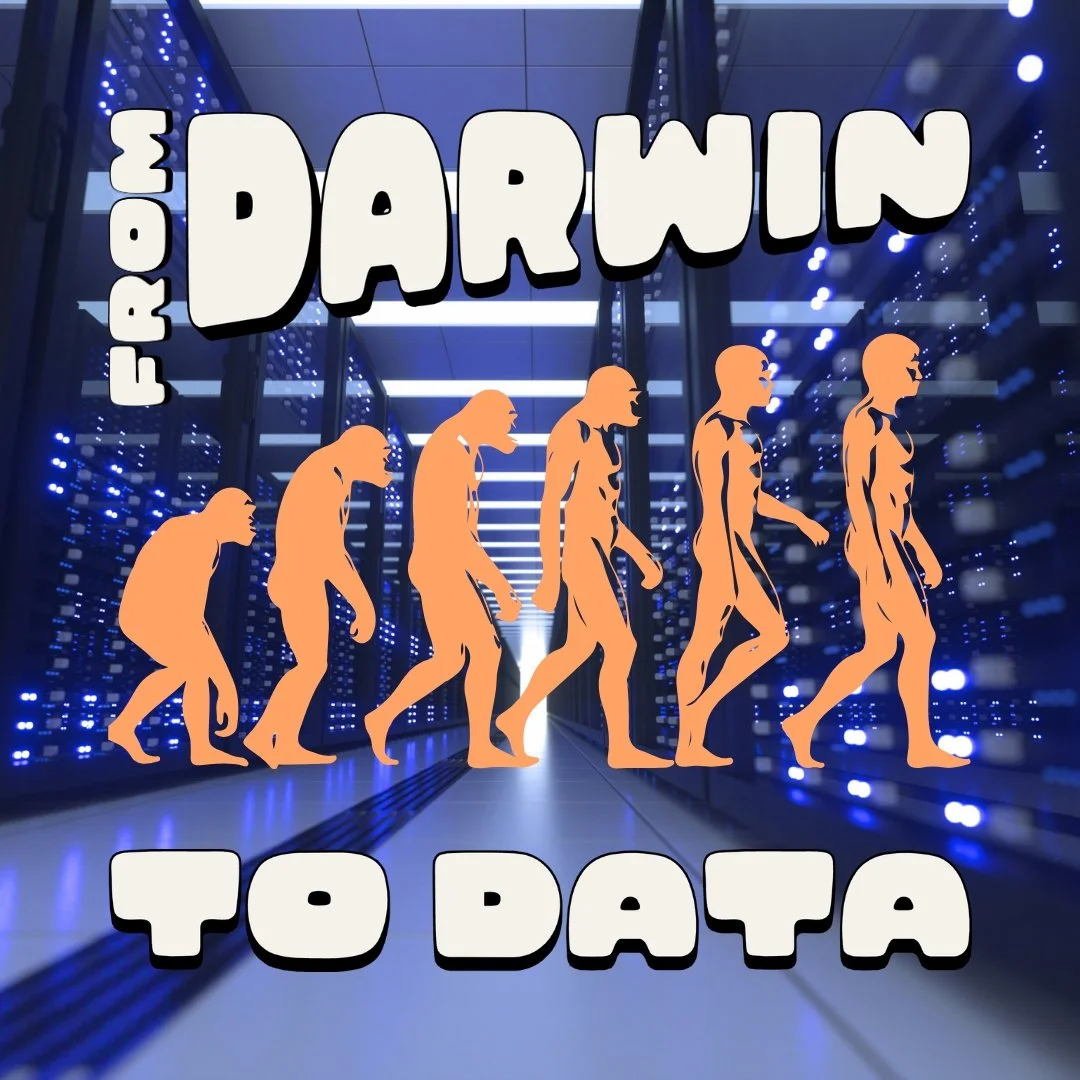
Read: From Darwin to Data, How AI Continues Humanity’s Greatest Reframing.
Self-Assessment: Is your choicetech helping or holding you back? Created by Remake The Rules.

Listen: A conversation about choice inflation with Emily on Mental Wealth Podcast.
Read: Choicetech, Choice Inflation and the Disappearing Defaults of Modern Life

Listen: Rethinking Decisions in a World of Information Overload.

Read: Choosing Wisely: Building the Skills for a Complex Future. Our choices make us, the people we become and the lives we live.

Listen: Choice and Tech Overload. Emily on Action's Antidotes Podcast.

Want to collaborate with Remake The Rules? Let's connect!
Where do we go from here?
Help!
Do you have any recommendations for aspirational, near-future speculative fiction? Drop them below.
Books, movies, TV—anything to help us get excited about the potential good we can accomplish together in this crazy new human-tech hybrid world we live in.