Decision support for one of society’s most complex problems:
public safety.
Remake The Rules provides a comprehensive suite of services to facilitate operational excellence and sustained growth for law enforcement agencies of all sizes.
Let’s get to work

See what other agencies have already accomplished with Remake The Rules.
Explore how Remake The Rules helps leaders build resilient institutions.

Learn how Remake The Rules brings comprehensive support to your most pressing and complex choices.
Featured Partnership
Dacono Police Department | Colorado

A Public Dashboard Is Just the Beginning
What begins as a public transparency project can become the foundation for something much more substantial.
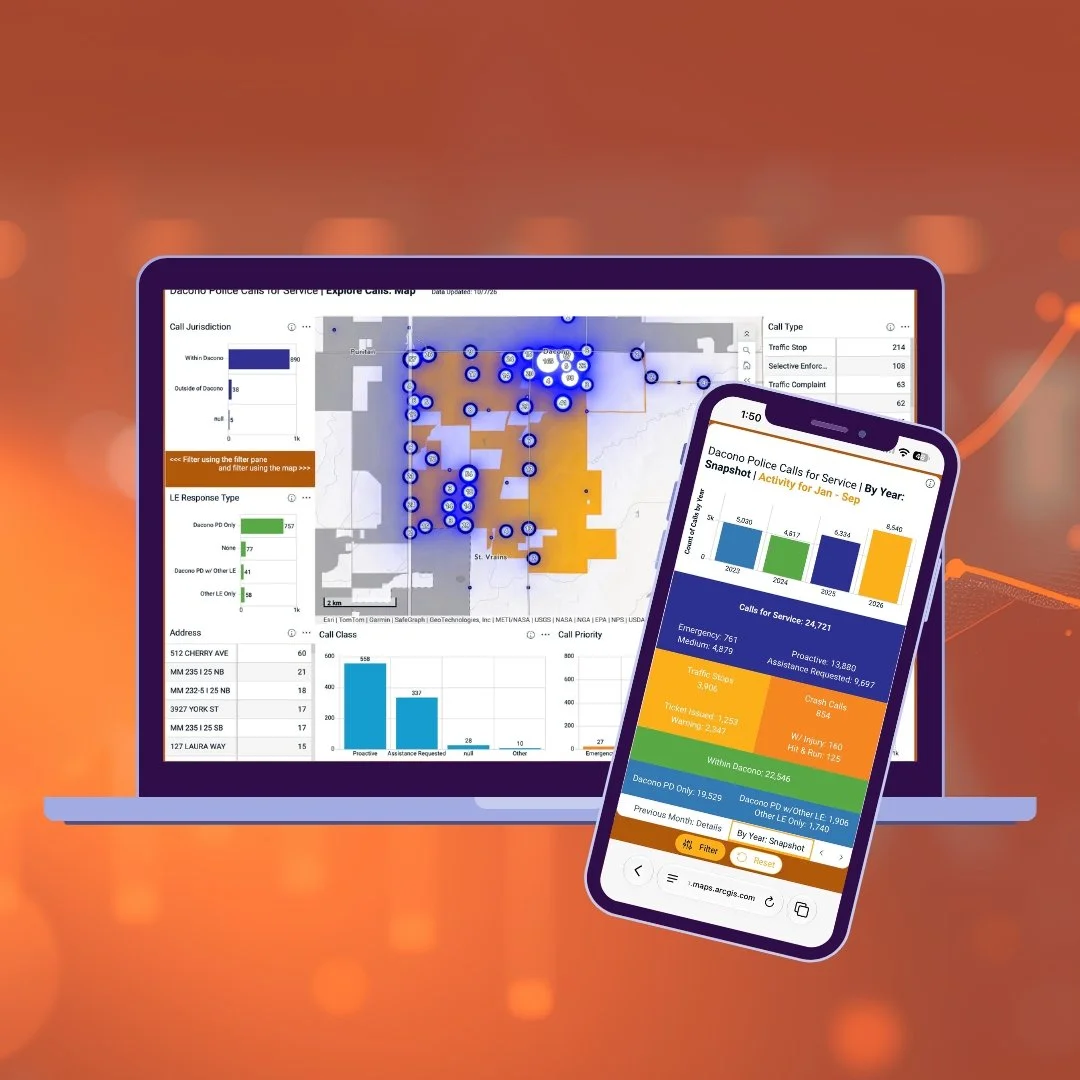
Through my ongoing partnership with the Dacono Police Department, I'm helping strengthen the department's analytical capabilities, from evaluating existing information systems to developing resources for operational and strategic decision-making.
One visible result is the department's new public Calls for Service dashboard. Built using existing data and software, it provides a consistent, accessible foundation for conversations about public safety, with an emphasis on making the underlying analytical resources sustainable, transferable, and expandable.
But the dashboard is just one piece of a much broader effort: building the capacity to explore increasingly sophisticated questions about how officers spend their time, where resources are stretched, and what's actually working.
Solutions Engineered for Measurable Impact

Remake The Rules provides a comprehensive suite of services to facilitate operational excellence and sustained growth for law enforcement agencies of all sizes.
Services are tailored to each client’s needs and often include:
-
Understanding current informational and analytical capacities, limitations, and opportunities.
-
Recommending improvements and possible paths forward.
-
Evaluating new and old systems, fixing information flows, and advocating for internal software users
-
with privacy and data protection laws and policies.
-
Building and onboarding new data and analytic tools.
-
Supporting data-driven leadership and executive decision making through choicetech literacy coaching.
Choicetech Literacy in Policing
Police departments already make decisions inside complex, technology-mediated environments.
CAD, RMS, dashboards, crime analysis tools, body-worn camera systems, AI products, staffing models, alerts, policies, workflows, and performance measures all shape what becomes visible, what gets prioritized, and how judgment happens.
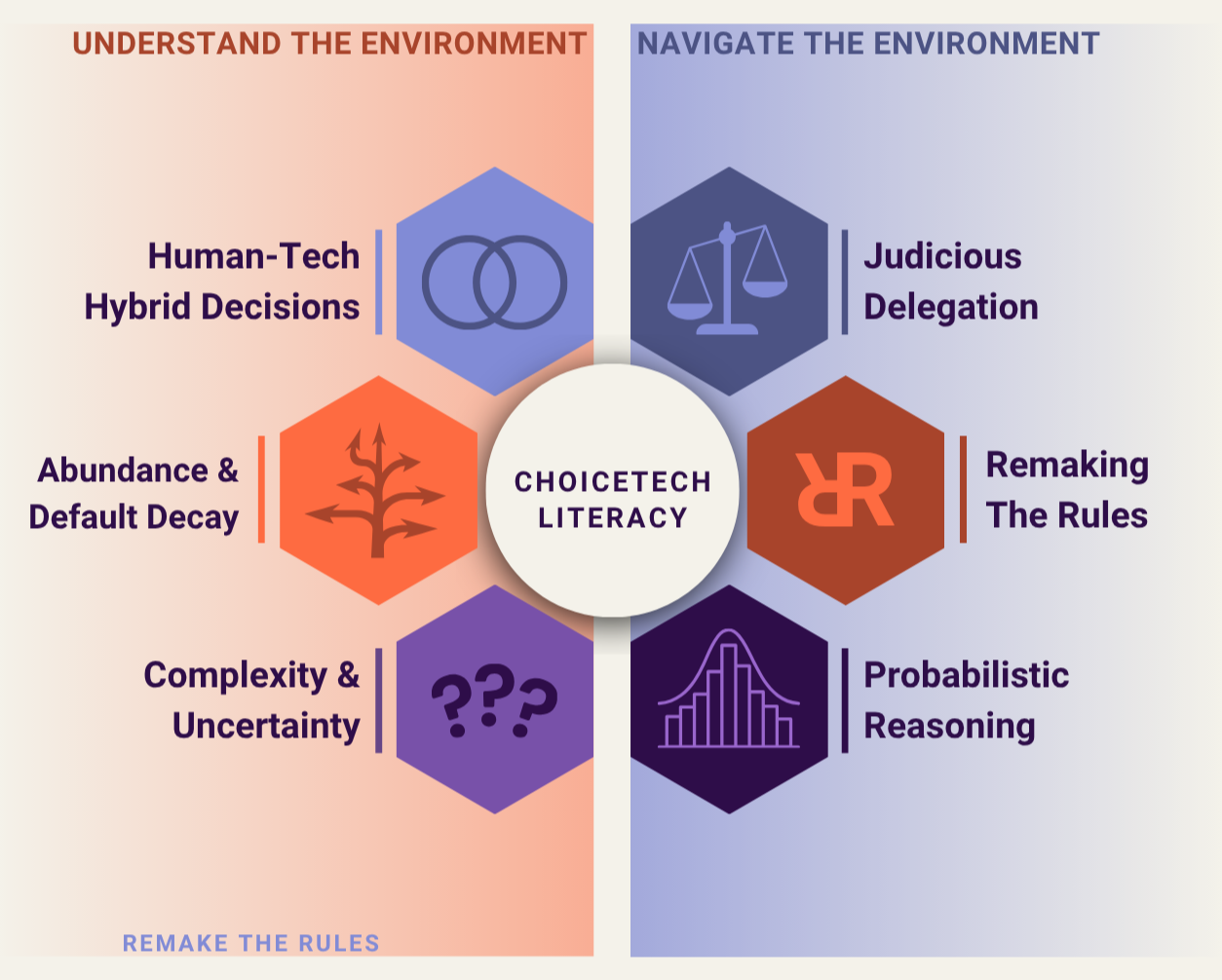
Choicetech literacy helps leaders understand those environments and use them more deliberately.
In policing, that can mean:
Human-Tech Hybrid Decisions + Judicious Delegation
Understanding how officer judgment, supervision, policies, data systems, alerts, and analytical tools work together, and deciding what should be automated, reviewed, or kept close to human judgment.Abundance & Default Decay + Remaking the Rules
Recognizing that departments can now collect and monitor far more information than older workflows were designed for, then rebuilding reporting, review, escalation, and decision rules around current capabilities.Complexity & Uncertainty + Probabilistic Reasoning
Using data without expecting it to eliminate uncertainty: interpreting variation, rare events, patterns, rates, and trends without turning every signal into a conclusion.
The goal is not merely more technology. It is better decisions inside the technology-rich environments departments already operate in.
Structured Precision, Every Step

We initiate each engagement with a focused discovery phase.

Data, processes, and decision support tools are subjected to rigorous analysis.
Insights inform a tailored strategy that addresses defined goals.

Approved strategies transition to implementation under disciplined governance.
Self-Assessments, Podcasts, Essays & More
Read: What Happens After the Dashboard Goes Live?
Self-Assessment: 10 minutes to see if your information tools are powering or undermining your leadership. Created by Remake The Rules.
Read: How Institutions Miss What They Know
Read: What I learned from a decade in policing and why I started Remake The Rules.
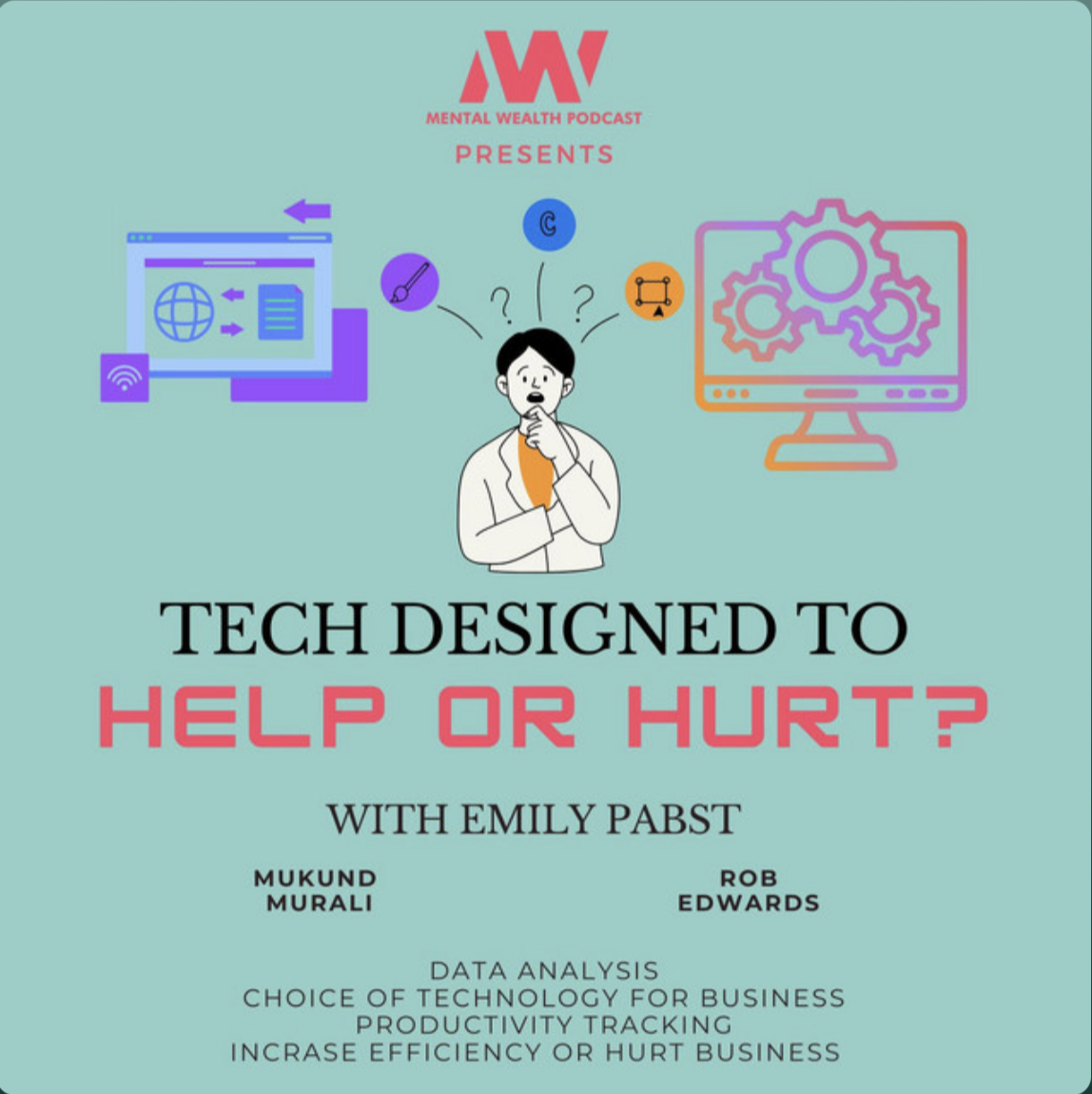
Listen: Does our choicetech help or hurt us? Emily as the guest on Mental Wealth Podcast.

Meet Emily.

Read: What is a fractional CIO? And why organizations are shifting to this model.
Selected Policing Projects

Resource Allocation: 5–10 Year Growth & Deployment Projections
The problem: A city growing faster than its police districts can keep up with.
The solution: Integrated residential development trends and roadway expansion with call-for-service (CFS) volume.
The result: Linked resource allocation directly to response-time performance, giving City Managers a roadmap for sustainable growth and infrastructure needs.